Effect of Air Quality on Mental Health
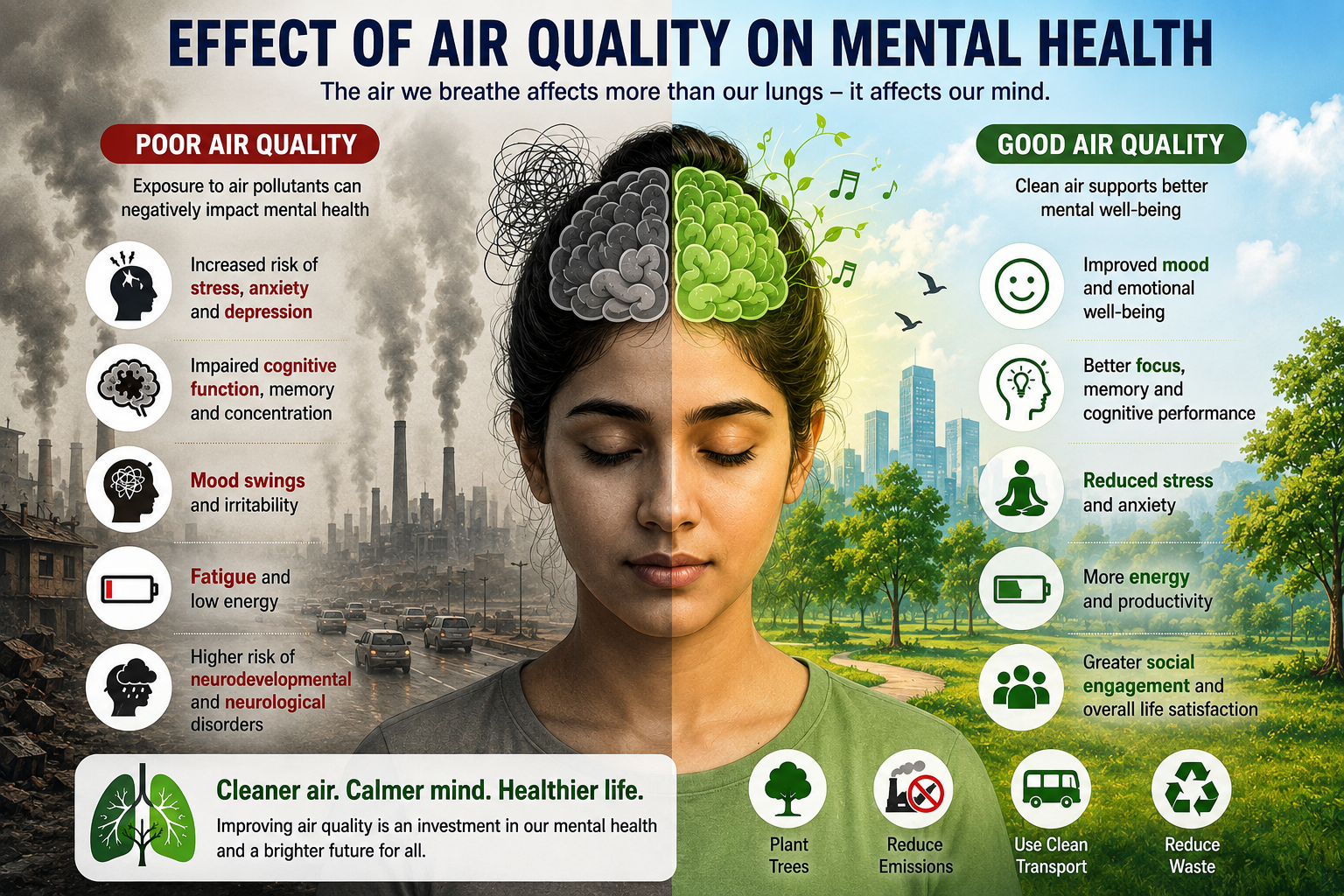
Air quality has a significant influence on mental health, affecting both emotional well-being and cognitive function. Exposure to air pollutants such as fine particulate matter (PM2.5), nitrogen dioxide, and ozone has been linked to increased levels of stress, anxiety, and depression. Pollutants can trigger inflammatory responses in the body and brain, potentially altering neurotransmitter activity and contributing to mood disorders. Individuals living in areas with poor air quality often report lower overall life satisfaction and higher levels of psychological distress.
Research has also shown that prolonged exposure to polluted air may impair cognitive performance and increase the risk of neurodevelopmental and neurodegenerative conditions. Poor air quality can affect concentration, memory, and decision-making abilities, impacting academic achievement, workplace productivity, and daily functioning. Children, older adults, and individuals with pre-existing mental health conditions are particularly vulnerable to these effects, as their brains may be more susceptible to environmental stressors.
Beyond the direct biological impacts, poor air quality can indirectly affect mental health by limiting outdoor activities and social interactions. During periods of heavy pollution, people may avoid exercise, recreation, and community engagement, all of which are important contributors to psychological well-being. Concerns about environmental conditions and long-term health risks can also create feelings of uncertainty and anxiety. Consequently, improving air quality can provide both physical and mental health benefits, contributing to healthier and more resilient communities.
How Hindustani classical music improves mental health
Hindustani classical music plays a valuable role in supporting mental health by promoting relaxation, emotional balance, and stress reduction. The structured yet expressive nature of ragas creates a calming auditory environment that helps regulate mood and reduce feelings of anxiety. Slow, meditative performances, particularly those featuring extended alaap sections, encourage focused listening and mindfulness, allowing individuals to disengage from daily stressors and experience a sense of inner calm.
The emotional depth of Hindustani classical music also provides a healthy outlet for emotional expression and reflection. Different ragas are traditionally associated with specific moods, times of day, and emotional states, enabling listeners to connect with and process their feelings in a meaningful way. Whether evoking serenity, devotion, joy, or contemplation, these musical experiences can foster emotional awareness and resilience, which are important components of mental well-being. The emotional balance is restored and mental stressors negated even more so when one listens to specific ragas resonating the mood of each 3 hour period of a day – called “Prahar”. Mental health improves when the musical notes of Hindustani classical music match the mood of the period of the day when it is heard. A nice compilation of ragas with the time of the day can be found HERE.
In addition to its emotional benefits, engaging with Hindustani classical music—either through listening, learning, or performing—can enhance cognitive function and concentration. The intricate melodic patterns, rhythmic cycles, and improvisational elements require sustained attention and mental engagement, which may help improve focus and memory. Participation in musical practice can also provide a sense of achievement, purpose, and social connection when pursued within a learning community, further contributing to positive mental health outcomes and overall quality of life.
Medical Disclaimer: This article is not medical advice. Contact your doctor for specific diagnosed remedies.